Writing Program
As Millsaps College takes considerable pride in developing highly competent writers, both curricular and extra-curricular writing initiatives are central to the Major student experience. Throughout your academic journey here, you will find that writing activities make up a significant portion of the learning and assessment tools in each of your classes. Additionally, beyond the classroom, students will submit a portfolio of written work completed during their time as a student as a requirement for graduation. The Writing Program then culminates with a senior essay that encourages students to reflect on their time at Millsaps and the ways in which their time here has prepared them for life beyond our institution.
Writing Across the Curriculum
The Millsaps College Writing Program is one of the College’s hallmarks. Recognized as one of the premier writing programs in the country, we are known for making Writing Across the Curriculum work. That means that we take writing seriously, and we work hard to ensure that every student has plenty of opportunities to improve writing skills. We also work one-on-one with faculty members to support their use of writing in their courses.
The Writing Across the Curriculum approach that the Millsaps Writing Program uses operates on the simple philosophy that writing is a skill requisite to every academic pursuit. It is not the domain or responsibility of single faculty members, departments, or divisions. It is a campus-wide, holistic approach to teaching writing. In short, from the earliest WAC theorists to contemporary post-process theorists, the consensus in this WAC strain of writing theory and pedagogy is this: that students can neither be injected with writing skills nor vaccinated against poor writing habits in one single course; that the writing process and, therefore, the teaching of writing is a recursive process; that students learn to write most successfully in environments in which their writing skills are measured in all courses and in which good writing habits are reinforced in various courses and by various instructors.
The intent of the Writing Program is to support all faculty as they help students develop writing skills in courses across our entire curriculum, providing students with opportunities to write in various disciplines. Millsaps requires the writing intensive “Connections” course and other Compass courses to develop a coherent, scholarly atmosphere in which students develop competent and effective means of written and oral communication.
To this end, our Writing Across the Curriculum (WAC) approach designed to offer clear and effective writing instruction in the initial writing intensive course—Connections—and to support and extend that instruction through other writing intensive courses in all disciplines on campus. Other courses on campus, including upper level courses in all three divisions and every major on campus, ought also to contribute to this campus-wide emphasis on one of the primary liberal arts abilities: written communication.
Compass Writing Guidelines for Faculty (PDF)
Writing Proficiency Portfolio
For all Millsaps students regardless of major:
The deadline for completion of the Writing Proficiency Portfolio is the end of the spring semester of students’ second year. The portfolio consists of six documents divided across three sections and can be uploaded in the Writing Program Course Connect “class.”
Failure to complete this requirement on time will result in registration delays in subsequent semesters and may prohibit you from taking your comprehensive examinations.
Required Portfolio Documents:
1. A brief (2-4 pages) reflective introduction to the portfolio. Written outside the context of a specific course, this document serves as the student’s thesis about their writing development at Millsaps. Subsequent items provide the evidence referenced in this reflective introduction.
2. Four (4) papers from classes taken at Millsaps College, taken from at least two (2) of the three divisions below.
- Arts & Humanities
- Business
- Sciences including the Social Sciences
These papers will normally be sourced from courses taken to fulfill elements of the Core Curriculum. Of these 4 papers, at least two (2) must demonstrate use of multiple secondary research and proper application of a clearly identified/identifiable documentation system.
3. One (1) “wild card” document reflecting an element of the student’s communication development. This document can be written, oral (recording/video), or visual in nature; the only requirement is that it is sharable in digital form. It is expected that this portfolio element will also be drawn from work completed for a class taken during a student’s first two years.
Special note for Transfer students: The categories for essay submission may vary according to the student’s academic record prior to attending Millsaps College. Transfer students are permitted to include up to two (2) portfolio elements composed prior to entering Millsaps College.
For more information or guidance with compiling the portfolio elements, please visit the Writing Center in John Stone Hall or contact Josh Sullivan, Director of the Writing Proficiency Process.
Core 10 Essay Requirements
This paper should be based on thoughtful, evaluative reflection of your experience at Millsaps College. Focus your attention on the specific texts you have read, courses you have taken, the academic challenges you have confronted, the social experiences that left a deep impression on you, the professors who taught you and perhaps influenced you in some way, the adventures you have undertaken. What were your hopes and expectations before you came to Millsaps? Have these hopes and expectations been realized, changed? If so, how? In what way? Has your work in the (Physics, English, etc.) major complemented your Millsaps Compass coursework and has it aided you in achieving your hopes and expectations on a more personal level? Do you believe that you have obtained a good liberal arts education at Millsaps College with its emphasis on specific learning outcomes (eg, Thinking & Reasoning, Communication, Problem Solving & Creative Practice, Integrative & Collaborative Learning)? How? Why? Do you feel prepared to move on to the next phase of your life?
Frank & Rachel Anne Laney Award
The Frank and Rachel Anne Laney Award will be given each spring for the best Reflective Paper written to satisfy the Core 10 requirement during the academic year. The Award is intended to encourage students to reflect on the value of their education in the liberal arts.
The Laney Award will be presented at Commencement and will carry a substantial cash prize. Submitted papers will be reviewed by a faculty panel to determine the best paper. The best paper along with other selected papers from those submitted will be published annually. These papers will be given to every incoming freshman the following fall, and the best paper (and perhaps other selections) will be required reading.
See more about the award and a list of past winners.
Deadline: Any student may submit his or her Core 10 reflective paper to the Core office in order to be considered for this award. A late-April date will be set each year.
Length: The usual expectation is that Core 10 papers will be from 4-5 pages. For the purposes of this award, papers may not exceed 8 typed, double-spaced pages.
Judging: Papers will be reviewed anonymously by a committee of four faculty members, including the Writing Director (who will chair the committee) and one faculty member from each division of the College (appointed by the Dean of the College).
Disposition of Papers: In addition to the winning paper, the top ten or twelve papers will be printed and collected each year for the next freshman class to read. The papers will also be published on the College Web site so that everyone has access to them.
Criteria: In judging papers, the committee will consider the quality of thought and expression, as well as the writer’s ability to relate the Core experience to the major and to the wider context of the liberal arts.
Format: All papers must be neatly typed (word-processed) on standard white paper with a cover sheet including the student’s name and the title of the paper. The student’s name should appear nowhere else in the manuscript. In the Core office the cover sheet will be detached and a number will be assigned to each for the purposes of anonymity.


Latest News
Alumni Spotlight: The Rt. Rev Shannon Rogers Duckworth
I left Millsaps not just with a degree, but with a way of engaging with the world… curious, collaborative and unwilling to settle for the surface answer.
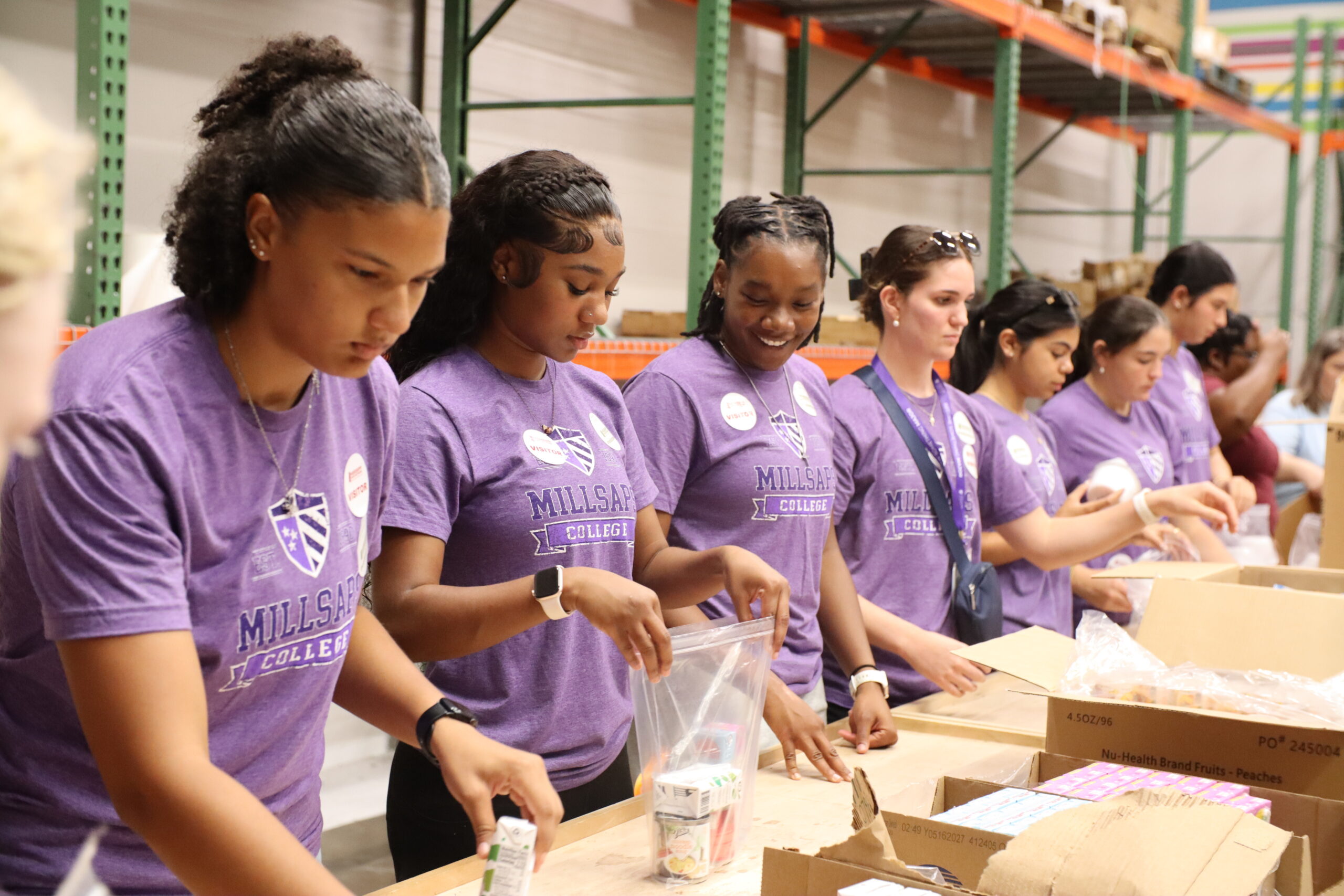
Major Traditions: Day of Service
I’m so happy that this is how I started my journey here at Millsaps because I love giving back to other people and just to know that it’s so local to Millsaps and that we’re actually helping our local community.
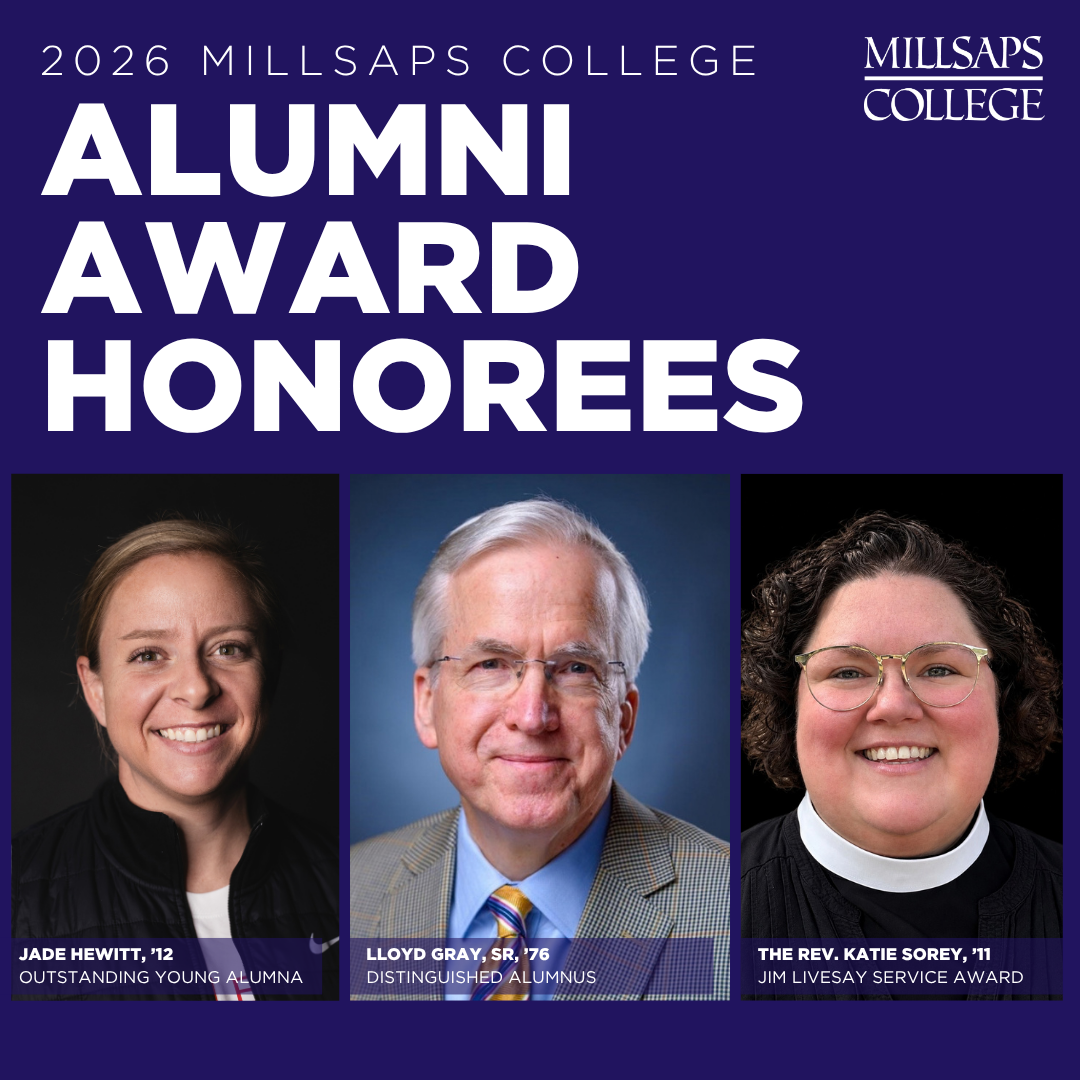
Millsaps College Announces 2026 Alumni Award Recipients
Millsaps College is proud to announce the recipients of its 2026 Alumni Awards, honoring three outstanding grads whose achievements and service reflect the enduring values of leadership, community engagement and excellence.

Millsaps Math Major Wins National Award Following Summer Research Circuit
The opportunities that are available to a select few people at bigger schools are available to everybody here.